
 Image 1 of 1
Captured during the fleeting window of a crisp winter sunset in the historic town of Windsor, Shadow of the Gateway is a study in cinematic suspense, chromatic tension, and layered regional heritage.
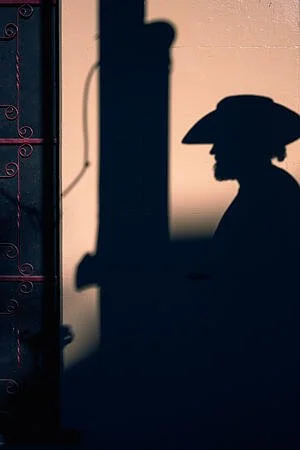
The image flattens separate eras of history into a single, high-contrast plane. On the left, a striking sliver of ornate, crimson ironwork stands as a rigid anchor—a mid-20th-century door modification attached to a late-19th-century masonry facade. On the right, the low winter light stretches the cool silhouette of a lone stockman against a warm wall rendered in the visceral hue of skin—transforming the cold plaster into a living, tactile canvas. By placing this figure at the edge of the frame, the composition leans heavily into Windsor’s historic identity as a gateway outpost—the precise frontier threshold where coastal settlement ended and the rugged Australian interior began.
Captured during the fleeting window of a crisp winter sunset in the historic town of Windsor, Shadow of the Gateway is a study in cinematic suspense, chromatic tension, and layered regional heritage.
The image flattens separate eras of history into a single, high-contrast plane. On the left, a striking sliver of ornate, crimson ironwork stands as a rigid anchor—a mid-20th-century door modification attached to a late-19th-century masonry facade. On the right, the low winter light stretches the cool silhouette of a lone stockman against a warm wall rendered in the visceral hue of skin—transforming the cold plaster into a living, tactile canvas. By placing this figure at the edge of the frame, the composition leans heavily into Windsor’s historic identity as a gateway outpost—the precise frontier threshold where coastal settlement ended and the rugged Australian interior began.